社会分析 / 2026/5/4
中文/EnglishSome Thoughts on Stereotypes
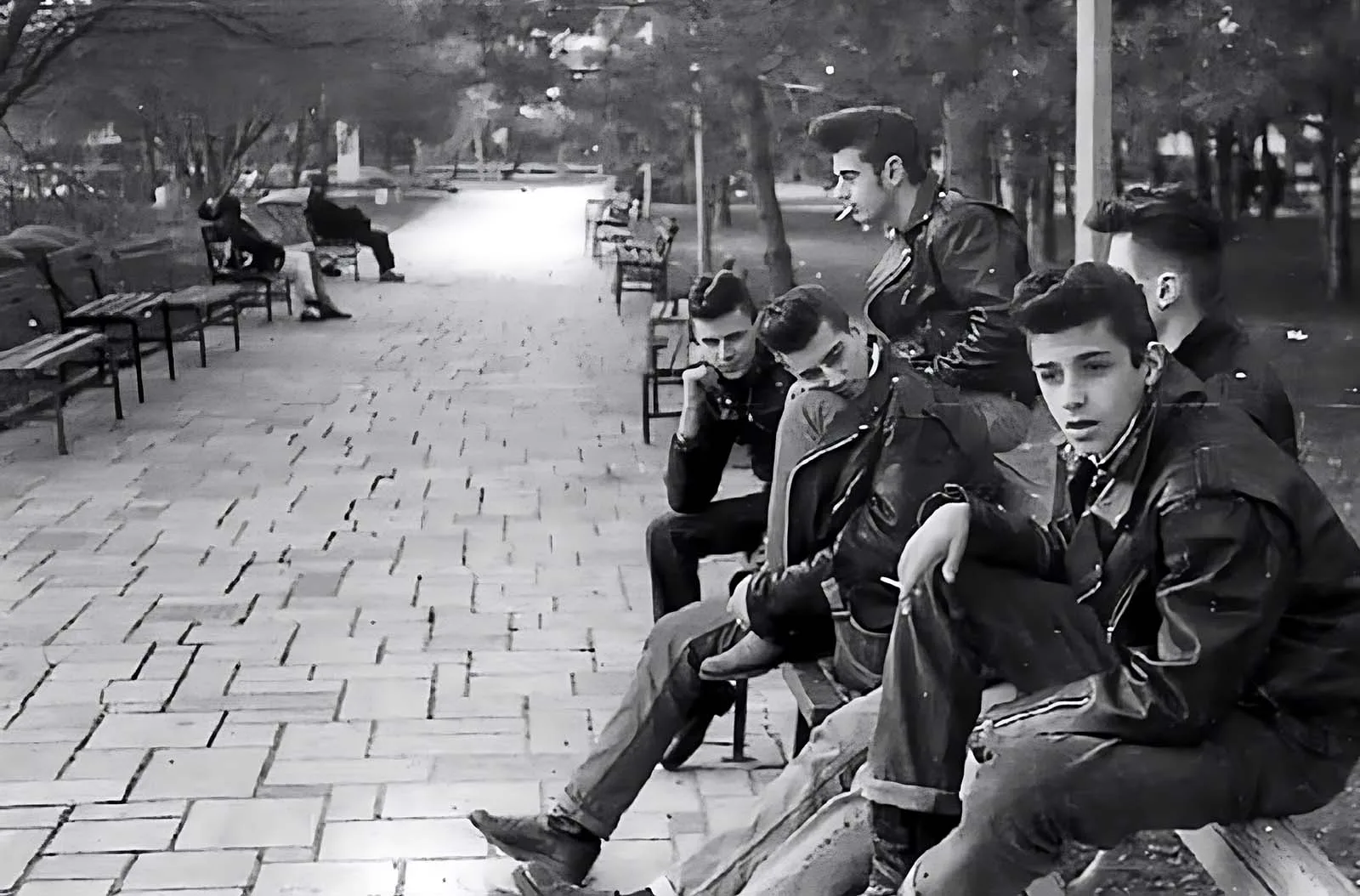
What I want to talk about today is some reflections on stereotypes and critical thinking that we're currently studying in school. Of course, I'm not here to trash critical thinking or stereotypes—I think having them is better than not having them. But I do think on several points, what we're learning in school right now drifts away from the essence of these two important ways of thinking.
Let me start with stereotypes. Stereotypes don't come out of nowhere. They don't fall from the sky, and they aren't conjured up out of thin air—they're always based on some observation of reality, whether that observation is one-sided or not. These stereotypes always exist. Sometimes, derogatory stereotypes about certain groups absolutely need to be removed. But sometimes, overemphasizing the removal of stereotypes in the wrong context actually ends up preventing you from seeing the truth.
Take the Outsiders we read for example. There's always this push to treat the characters as full human beings, to see them whole, and then to pull out the bad parts and focus on the good. I think that way of thinking is genuinely toxic in the context of a book like that. For instance, in our assignments on the Outsiders, we're asked to look at what good qualities the Socs have and how they differ from stereotypes. One example says that the Greasers see the Socs as "white trash," but in reality, they're not. So right there, that's a special kind of stereotype—what I'd call a one-sided stereotype. It's a stereotype that reflects part of the truth. Sure, there are other truths too, but to the Greasers, what they see and feel about the Socs is their stereotype, and there's no meaningful difference between the two.
So at that point, asking the Greasers to be tolerant of these people? That's setting the moral bar way too high. Jumping out of cars, harassing and beating up lone Greasers, acting violent, exercising oppression. These aren't problems you can solve by having both sides make peace in their hearts. A lot of the time, stereotypes are tools the powerful use to oppress the weak, or tools to simply ignore the weak. If you take that tool and use it to excuse the oppression of the powerful, that's just shameless. Let me put it this way: a person having good qualities doesn't stop them from having bad ones. Seeing someone's good side doesn't mean you get to forgive their bad side.
Here's a random example. Thomas Jefferson was a founding father of the United States, the principal drafter of the Declaration of Independence, the man who wrote "all men are created equal." He made enormous contributions to the founding of America and to the spread of modern democratic thought. But those contributions don't erase the fact that Jefferson owned over six hundred slaves over the course of his life, forcing them into labor, stripping them of their freedom and their human rights. For the people who lost their freedom, lost their families, and were enslaved for generations on his plantation—you want them to read Jefferson's beautiful words about liberty and then just forgive him? That's a terrible thing to do. So to sum it up: stereotypes are mainly tools the powerful use to oppress the weak, and you can't use them to excuse the powerful's oppression. Second, stereotypes are often half-true, but half-true isn't the same as false—it's still real. Third, psychological forgiveness doesn't change the actual oppression and violence that happened in physical reality.
Now, about critical thinking—I'll say a bit less on this. Since ancient times, there has never been a case where critical thinking had a standard answer. If you can take a set method to think critically—or more concretely, if you can follow a convenient, executable procedure to think critically—then that definitely isn't critical thinking. That's just normal logical reasoning. What you subject to critical scrutiny matters enormously. You should be critiquing systems, critiquing a certain logic or a certain way of thinking—not a specific fact that happened.
A very typical example: the two-sided debate. Roughly, it works like this: the teacher gives the students a controversial topic—like "should GMO foods be banned" or "should we go to Mars?"—and then splits the class into two groups, one for, one against. Each side gathers evidence and debates. Sometimes after the debate they switch sides, or the teacher asks students to think from both perspectives.
After the debate, the teacher usually says something like: see, this issue is complex, both sides make sense, what matters is that you learned to think independently, removed your bias, and can look at the issue 50/50. So where's the problem? The problem is equating having evidence with having a valid argument. What students actually learn isn't how to arrive at a conclusion, how to get closer to the truth—not necessarily reaching it, but getting closer. What they learn is rhetorical technique. They learn that any conclusion can stand as long as you find arguments to support it. This kind of exercise completely sidesteps what we call the core question of epistemology—how do I judge whether something is true or false? I don't believe everything in this world is half-true and half-false, and removing bias doesn't mean everything becomes ambiguous. There are always things with clear conclusions. And what this kind of training produces is a pseudo-critical thinking—one that can only question but never judge. Especially since so many guides tell you to find authoritative materials, to find "reliable sources," which is basically the opposite of critical thinking. The historical purpose of critical thinking was to judge. Like, I encounter something and I don't know if it's right or wrong. Through critical thinking, I can figure out whether it's right or wrong for me. But through the kind of exercises schools run now, all you learn is how to convince other people whether something is right or wrong. You can't convince yourself, because you never learned how to evaluate whether evidence is actually valid.
Proof of Publication
This article may have been published earlier, but this proof shows it existed no later than the date below.