社会分析 / 2026/5/7
中文/EnglishOn The Internationale (and Its Tragedy in Today’s World)
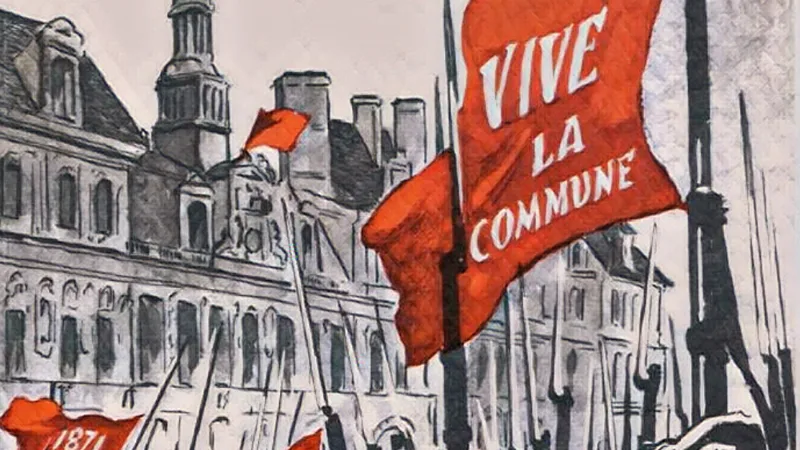
Yesterday in the class group chat we were talking about what song to sing for the sports meet, and I suggested The Internationale—it’s got power, a strong beat, perfect for a group sing‑along. A bunch of people freaked out, told me to shut up, scared I’d get the whole chat banned. When I pushed back, they just kicked me out of the group.
Today I asked a few of them what exactly they were afraid of. One guy said it’s an anti‑communist song. That’s flat‑out wrong—The Internationale is the anthem of the communist movement, the song every Party member is supposed to know, the one they belt out at the closing of every CCP congress. What that shows is a kind of intellectual laziness: people don’t want to check, don’t want to listen. They were so frantic they wouldn’t even let me finish a sentence.
Another one said he’s scared the chat will get banned for talking about this kind of stuff. I asked why, and he said he didn’t know, his mom had been banned before. I asked what kind of content gets banned, and he said, “I don’t know, anything political gets banned.” That’s a terrible attitude. The old saying goes, when the world rises or falls, every common person has a responsibility—it doesn’t mean you can sit pretty while everything falls apart.
That’s exactly the point of Rickshaw Boy: when the whole system is crushing and unequal, no amount of personal hustle can save you. If Xiangzi and the thousands of rickshaw pullers like him had joined the Party, joined the progressive movement, the revolution might have come a few years earlier, and Xiangzi wouldn’t have ended up a wreck—he could have fought for a decent future through real collective effort. That lesson holds for every era, so we can’t afford to flinch at these questions.
Which brings me to something I keep coming back to: be concrete. Some people hear “communism” and instantly picture Soviet tyranny or China’s problems. But almost no serious Marxist scholar thinks those regimes have anything to do with genuine communism. There’s a crucial trap here—take words for things—the original meaning of a term can be miles away from what you’ve been taught to think it means. To really dissect a problem you have to trace the word back to its source and its original sense. The stereotype that “communism = bad” has pushed countless young people away from Marxism, even though Marx’s historical materialism points toward the free development of every individual, not toward oppression.
This ties right into the stereotypes we dissected in our grammar packet. I see two roots. First, intellectual laziness: communism is a massive, messy topic—there’s China’s “socialism with Chinese characteristics,” Soviet authoritarianism, Western European social democracy, the real communism of the Paris Commune… sorting those out takes work, but you can’t just quit because it’s hard. Second, a binary‑thinking habit: back in the cave‑man days it was “us vs. them,” “good animal vs. bad animal,” “edible plant vs. poisonous plant.” Modern problems are way too tangled for that; every issue branches into dozens of sub‑issues, and if you stay stuck in a black‑or‑white frame you’ll walk straight into the traps other people set for you, freezing your own mind.
One last thing: watch out for the poison of individualism. Class 5 has a poster on the wall that reads “The harder you work, the luckier you get.” That’s pure nonsense—does a kid in the mountains of Yunnan, putting in the same effort as me, get the same results? Rickshaw Boy already showed that: many problems aren’t personal failures, they’re social failures. It’s depressing because social problems are harder to change, but at least it’s better than blaming yourself, which only leads to pointless, exhausting struggle.
The Outsiders makes the same point. The Greasers are working‑class white kids, constantly crushed by the upper‑class Socs—parents, jobs, life all falling apart. They sometimes fight back, even kill, in self‑defense. Yet when it comes to punishment, the Greasers get hit far harder than the Socs. The news reports “a Greaser kid killed someone,” but read the book and you see that “killer” is a decent, pitiable kid. It lays bare a fundamental contradiction: the law loves to pin blame on the individual, but most of the time the real responsibility lies in how society shaped that person.
Proof of Publication
This article may have been published earlier, but this proof shows it existed no later than the date below.