社会分析 / 2026/5/9
中文/EnglishThe 'Declining Nation' — What's the Cure?
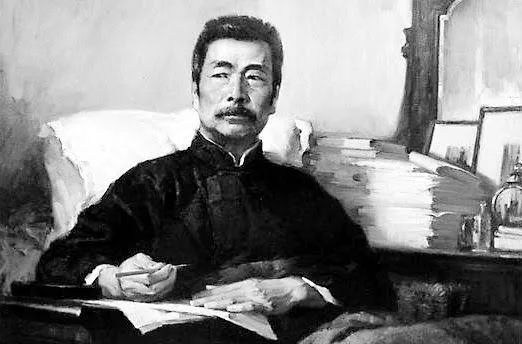
Revolution comes from dissatisfaction with reality, and my writing is no different. This piece is about a text we read in Chinese class — an article about Wen Yiduo. And about a widespread mentality among intellectuals and literary figures of that era.
Let me start with the actual passage: "He was delving into ancient classics, as if seeking treasure from the earth's crust. The higher he looked up, the more eager he was to climb. He wanted to devour, to digest the entire cultural history of the Chinese nation over thousands of years. His heroic gaze projected far back into prehistoric times — he wanted to prescribe a cultural remedy for our declining nation."
This kind of thinking was actually not uncommon in China's cultural circles at the time. Both the father of the famous physicist Yang Zhenning and Lu Xun in his earlier years wanted to save the so-called declining spirit of the Chinese nation by reviving certain specific strands of traditional culture.
But just as the Communist Party rescued the Chinese nation from crisis in those years, when we analyze the intellectuals and literary figures of the period before the Party's rise — and the direction they took — we have to use the Marxist method of historical materialism to dissect it.
Comrade Mao Zedong pointed out that correct ideas don't fall from the sky — they are produced in practice, in struggle. By the same logic, ideas that are out of step with the era, that are wrong, that are decadent — those too are produced under specific material conditions. Here I want to flag three core errors in this line of thinking.
First error: overestimating the usefulness of ancient culture. These intellectuals focused their research either on the Hundred Schools of Thought period or on later vernacular literature. Both have obvious problems. Between 1910 and 1920, China had already begun its industrialization and had become a semi-colonial, semi-feudal society. Once a society enters industrialization, its dominant ideology, material base, and culture all undergo massive transformation. Britain, the United States, the traditional European powers — they all prove this point. If, after entering the industrial age, you try to revive ideas that were current in the slave era to deal with the enormous shock of modernization and the national crisis brought by colonialism, you are fundamentally misjudging the direction of modern development. (Quick note: the Spring and Autumn and Warring States periods were slave societies — many people back then were treated worse than livestock.) Vernacular literature has its own serious limitations too. Lenin long ago questioned whether the working class, once organized, could achieve the discipline, advancedness, and unity needed for revolution. These three qualities are indispensable in revolution and in social transformation. Lenin's line brought plenty of problems, sure, but without those three qualities, the problems only get worse, not better. If you take the literature of the common people and the dominant culture of that era as the blueprint for the future, you're guaranteed to miss a tremendous opportunity.
Second error: losing your bearings during colonial invasion and rushing to cut ties with so-called Western culture. Some intellectuals saw Western culture coming in and were terrified — they lost their sense of identity. To shake it off as fast as possible, they panicked, flailed around, and in their anxiety latched onto traditional culture, grabbed at it and repurposed it for themselves. They swallowed it whole without caring whether it was bitter or sweet. This mentality led some people to lump ren, yi, li, zhi, xin and the rest into "Chinese traditional culture" wholesale, and to drag in hierarchies and the differential hierarchy model of agrarian society along with them, pushing these residuals of agricultural society into the industrial age. In most cases, productive forces determine relations of production. Likewise, large-scale transformations in productive forces shake the values of the superstructure. From that you can naturally deduce that under the same transformation in productive forces, the values of the superstructure will end up roughly similar. And from that you can naturally deduce that certain values are inevitable products of industrial or agricultural society — they aren't Chinese-specific, and they're certainly not Western-specific. Some people need to understand: just because something is branded as having a certain "characteristic" doesn't mean it's good. For example, during the agricultural civilization period, Western Europe also heavily emphasized collectivism, a certain spirit of sacrifice, and obedience. When China entered industrialization and modernization, it naturally became atomized and emphasized individual spiritual independence. This proves the point — it has nothing to do with East versus West, and everything to do with the mode of production. Ditch your narrow nationalism. Embrace broad internationalism and a universal mode of production, universal values (and I don't mean that human rights stuff they hang at the UN).
The last point is simpler: everyone should realize that many of these intellectuals belonged to the ruling class, many to the upper class. For them, preaching unity, obedience, sacrifice, and submission to the lower classes — that's obviously all upside for them with zero downside. The more clearheaded ones, like Lu Xun, realized in their later years that changing people through literature was a fantasy. He abandoned medicine for literature in his youth, believing that writing could save the souls of the Chinese people — and later discovered it actually couldn't. The more muddled ones, like Hu Shi, carried a bit of their own bourgeois delusion, thinking that gradualism and piecemeal reform could save a China on the verge of collapse. None of these are good ways to analyze a problem. The only way to analyze a problem is to start from practice, from productive forces, from the concrete characteristics of a given era, from concrete cases — only then can you clearly see the nature of the era and clearly identify the real solution.
Proof of Publication
This article may have been published earlier, but this proof shows it existed no later than the date below.