时事评论 / 2026/9/21
中文/EnglishFlu Challenge
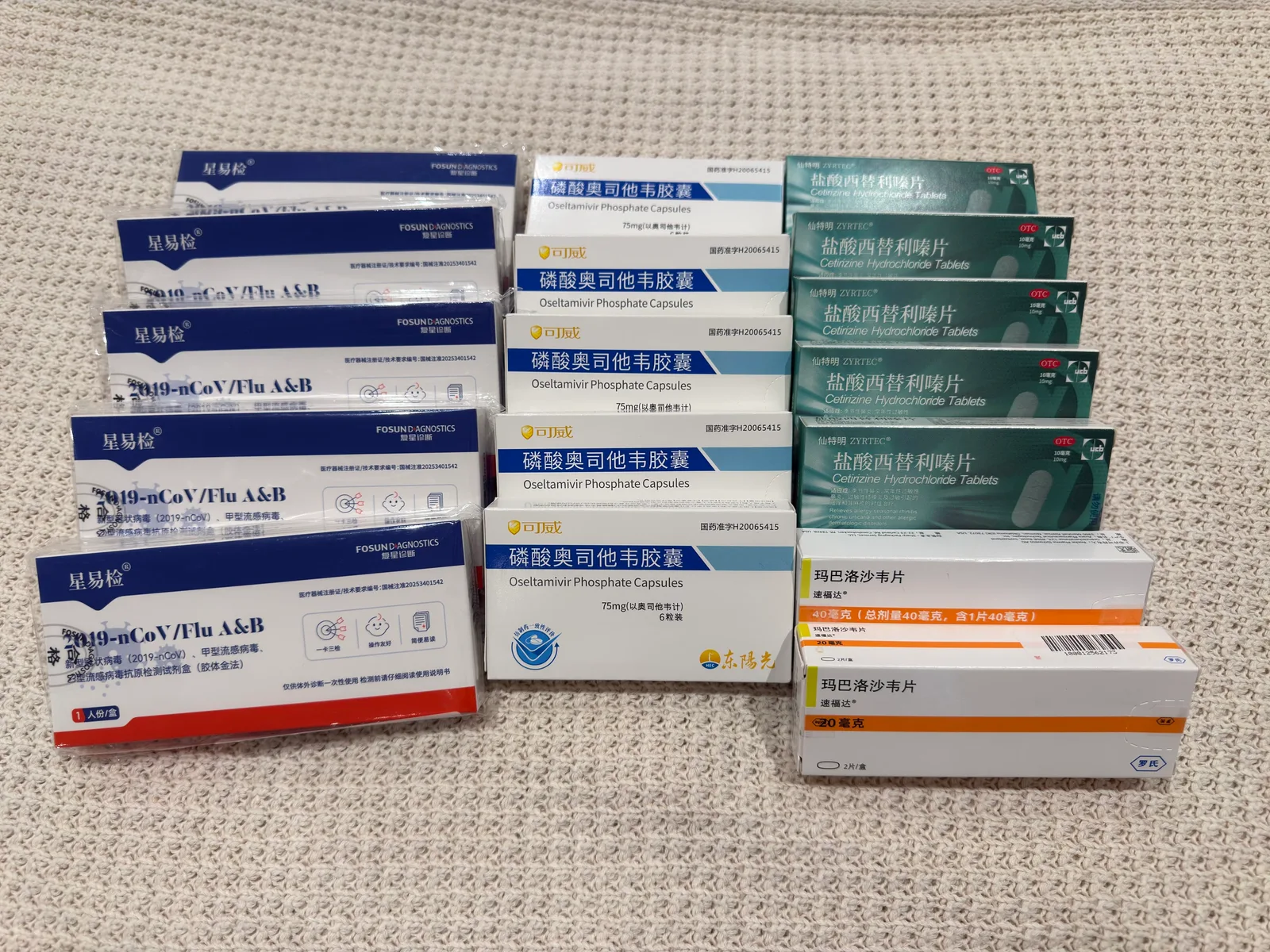
In my first months in Spain, I unfortunately caught influenza A, which later led to suspected mycoplasma or pneumonia. Of course I went to the doctor as a frequent and experienced hospital visitor, and several things caught my eye.
First, that there are no devices in the private hospital to test mycoplasma. Nor is it possible to purchase it online, as it is easily available for under 15 euros in China.
Second, that the private medical insurance has no coverage for the medicine, and the public one, only covering 35% to 60%, depending on the income of the citizen.
Third, that it is possible to purchase a lot of prescribed medicine in China online through Internet hospitals or virtual doctors, while it is completely not possible in Spain.
And now in this article I will just focus on the first problem, which is about why it is impossible to purchase self-testing devices/kits in Spain.
The mass availability of such self-testing kits in China is mainly due to the gigantic need of such kits during the pandemic. But to manufacture these kits, they must first obtain a license from the government.
In the most disastrous days of the pandemic, the Chinese government could approve a testing kit in less than 3 weeks, while their European counterpart had to spend months, and also a double, for everything has to be both approved in the European Union and separately in all the member states.
In Spain, the obstacle is even greater with self-testing kits, that for a long time they had only been allowed to be sell in pharmacies, and with a relatively small demand, pharmacies are very reluctant to include them into their SKU.
In the beginning of the pandemic, the Spanish government had even required self-testing process to be guided by a professional. Furthermore, the permission for self-testing kits to be sold in retail stores and online giants have only been given until late 2021, when the pandemic is near its end.
In the same time, such products have been approved in great amounts in China and quickly allowed to be sold in online giants such as JD and Taobao. The Dynamic zero-COVID policy of the Chinese government also created even greater need for such product.
As a result, the production capacity and availability of self-testing kits has exploded in China, while only growing modestly in Europe, which is still bounded by regulations.
After the pandemic, these production capacities of self-testing kits all set idle, which leads to the cruel pricing battle. As a result, the prices for self-testing kits for all sorts of diseases come down dramatically. In China it has become ever easier to test different diseases at home.
In conclusion, the combination of regulatory speed, market need, and distributional controls enabled China's domination regarding self-testing kits and also results to the European Union's complete defeat.
Interesting fact: in Spain, most hospitals and school nurses use axillary thermometer, which measures the body temperature under the armpit. When I was feeling cold and dizzy and had a headache, this thermometer measured me to be 35.6 degrees, while in reality I am 38 degrees.
Proof of Publication
This article may have been published earlier, but this proof shows it existed no later than the date below.